
What’s In This Guide
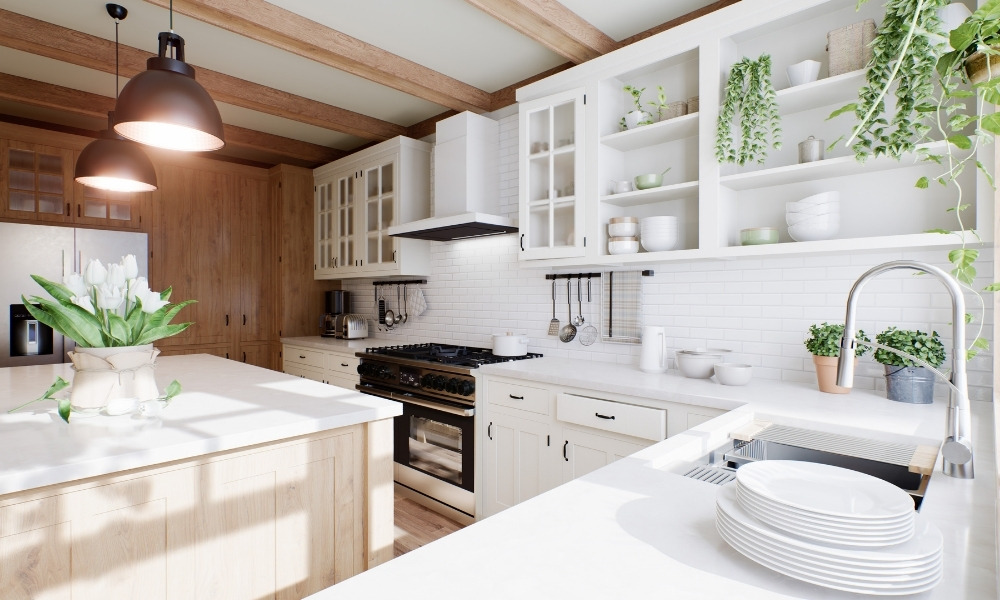
White cabinets create a flexible foundation, but wall color determines whether the kitchen feels crisp, warm, flat, or disconnected. The best kitchen paint colors with white cabinets complement the cabinetry’s undertone and coordinate with countertops, backsplash, flooring, and light.
A carefully chosen wall color can reduce harsh contrast, connect existing finishes, and give the room a cleaner, current appearance.
Quick Facts
- Match wall colors to the warm, cool, or neutral undertone of the white cabinets.
- Coordinate paint with countertops, backsplash, flooring, and nearby rooms.
- Test large samples under natural and artificial light before choosing.
- Use light shades for openness and darker colors for controlled contrast.
- Choose a washable finish and prepare kitchen walls properly before painting.
Best Kitchen Paint Colors With White Cabinets
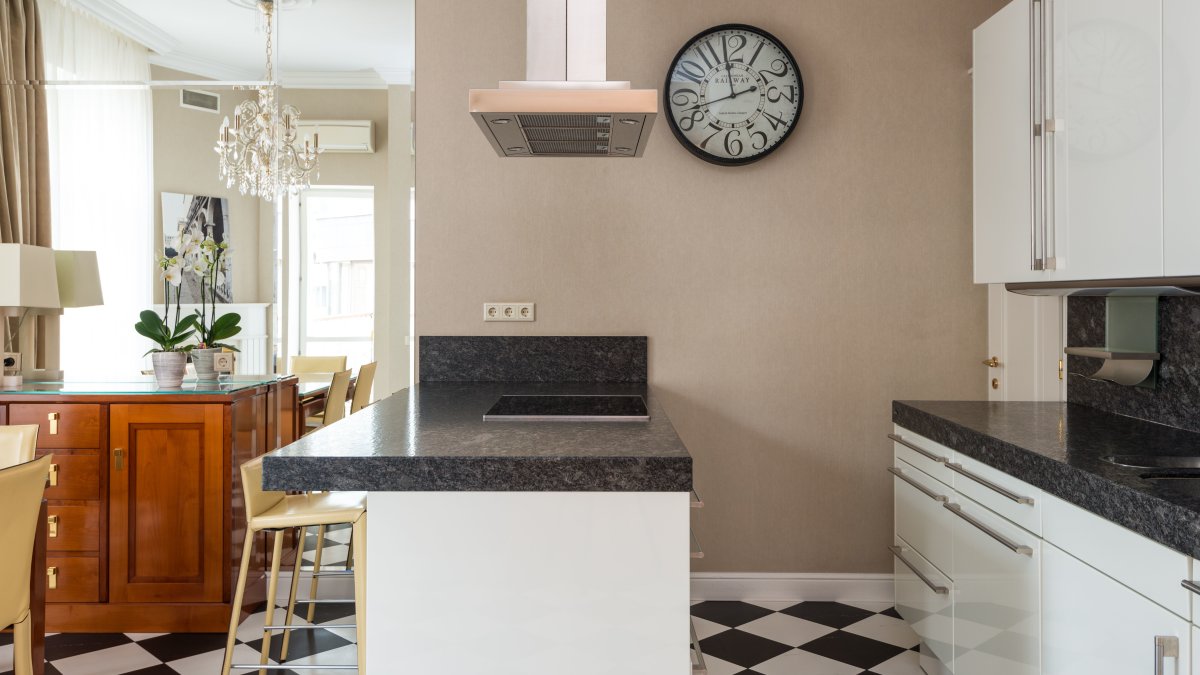
White cabinetry works with many palettes. Before choosing one, identify whether the cabinet white leans warm, cool, or neutral. Creamy whites usually favor warm shades, while blue-white cabinets often suit cooler colors.
Warm White or Soft Cream
Warm whites create a quiet palette without making the kitchen feel sterile. They pair well with ivory, cream, or off-white cabinets and elements such as wood floors, beige stone, or brass hardware. Choose a wall color with enough depth or tonal variation to distinguish it from the cabinets, as mismatched undertones can make surfaces appear dingy.
Light Greige
Blending gray and beige, greige is highly adaptable for white kitchens. It bridges cool cabinetry with warm flooring, especially if gray and brown tones appear in your countertops or backsplash. Use lighter shades to maintain an open feel or midtones for definition. Always test samples near fixed surfaces to check for hidden purple, green, or pink undertones.
Soft Taupe or Mushroom
Taupe and mushroom provide warmth and depth, pairing well with creamy cabinets, natural wood, aged brass, and brown-veined stone. These shades make large kitchens inviting without feeling heavy. In smaller or darker spaces, opt for a paler version to maintain an airy feel.
Muted Sage Green
Muted sage offers a calm, understated personality without overwhelming the space. Its gray undertone ties white cabinets to wood floors, black hardware, or warm stone. Test samples carefully, as sage can shift toward yellow in warm light or blue in cool light.
Dusty Blue
Dusty blue provides a relaxed contrast against white cabinets and works well with nickel finishes, gray countertops, and blue-gray backsplash details. Choose a soft, desaturated tone for a more subdued look. In low-light kitchens, select a lighter version to avoid a cold, dim atmosphere.
Deep Navy or Charcoal
Navy and charcoal create striking contrast but require ample light and space. If your kitchen feels enclosed, limit these shades to an accent wall, pantry, or dining nook. Balance the drama by repeating the dark tone in hardware, lighting, or seating, and pair with simple countertops to anchor the look.
How to Choose Kitchen Wall Paint Colors With White Cabinets
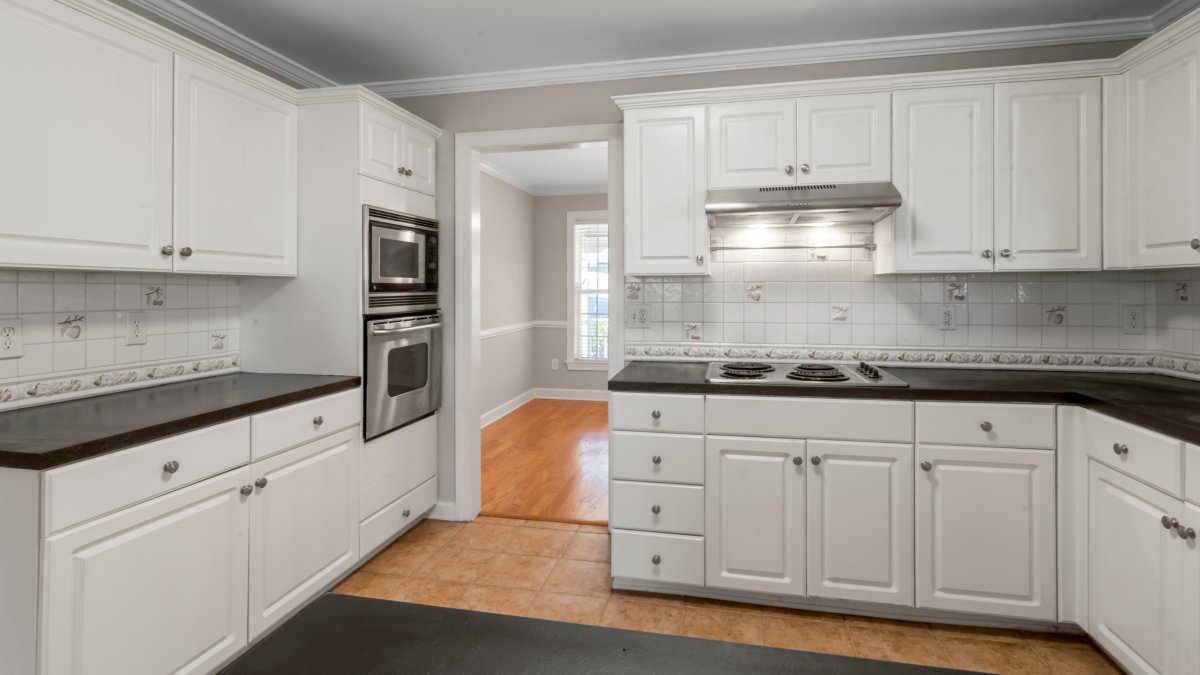
Follow these steps before buying paint for the entire room.
1. Identify the Cabinet Undertone
Hold a sheet of plain white paper beside a cabinet door in natural daylight. The comparison can make subtle cream, gray, blue, or neutral undertones easier to see. Begin with wall colors that either share the cabinet undertone or balance it without creating an obvious clash.
2. Read the Permanent Finishes
Identify the dominant and secondary colors in the countertops, backsplash, flooring, and nearby rooms. Choose a wall shade that repeats or complements one of those existing tones rather than introducing an unrelated color.
3. Evaluate Natural and Artificial Light
Place samples on several walls and observe them from morning through evening. The Department of Energy explains that the Color Rendering Index uses a scale of up to 100 to indicate how accurately a light source reveals colors compared with a reference source. LEDs with a higher CRI generally render colors more accurately, but testing paint under the kitchen’s actual lighting remains essential.
4. Test Large Samples
Small paint chips cannot accurately show how a color will behave across an entire wall. Paint large, movable sample boards or generous test areas, then compare them beside the cabinets and other fixed finishes. Observe each sample under the kitchen’s normal lighting at different times of day for several days.
5. Confirm the Finish and Preparation
Kitchen walls are regularly exposed to splashes, fingerprints, grease, and cleaning. Clean the walls thoroughly, remove grease, repair surface flaws, and apply primer where needed. In homes built before 1978, review the EPA’s lead-safe renovation and painting guidance before sanding, scraping, or otherwise disturbing older coatings.
Common Color-Pairing Mistakes to Avoid
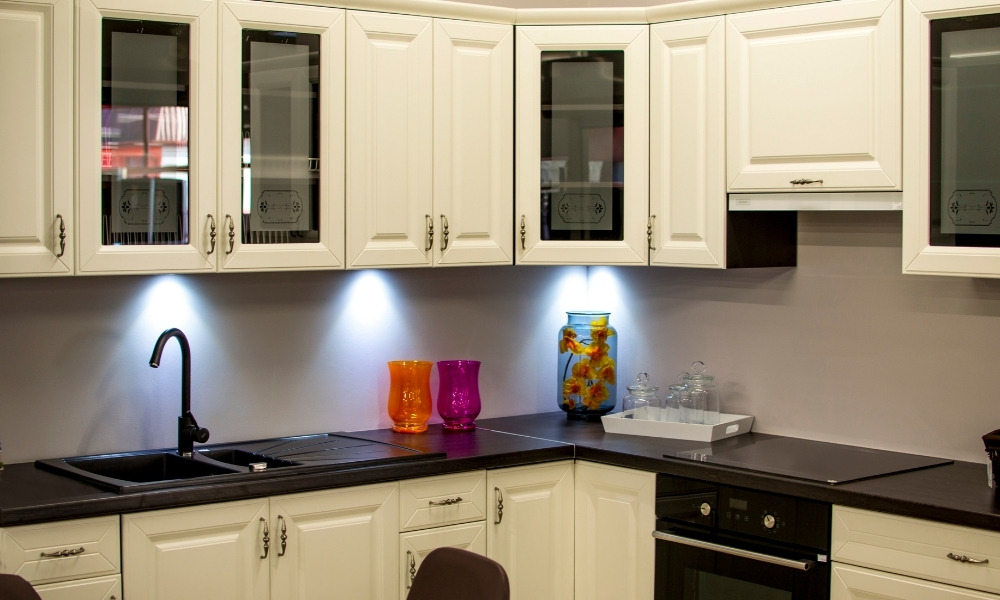
Even a suitable paint color can look wrong when it is selected without considering the kitchen’s lighting, cabinetry, and permanent finishes. Avoid these common mistakes before committing to a wall color.
- Relying on digital images or small paint chips: Test large samples under your kitchen’s natural and artificial light before choosing a color.
- Ignoring the cabinet undertone: Match the wall color to the cabinets’ warm, cool, or neutral undertone to avoid unwanted color shifts.
- Making every surface too similar: Use subtle contrast so the walls, cabinets, and finishes remain visually distinct.
- Choosing a trendy color without testing it: Confirm the color works with your lighting and permanent finishes before painting the entire room.
- Using dark colors without enough visual balance: Limit deep shades to selected areas and balance them with light, space, and coordinating accents.
Frequently Asked Questions
Can white walls work with white kitchen cabinets?
Yes. Pair warm whites with warm whites and cool whites with cool whites, then create slight contrast through depth or sheen. Test both whites together to prevent one from appearing dull or discolored.
Should kitchen walls be lighter or darker than white cabinets?
Either option can work. Light wall colors can make the kitchen feel more open, while midtone or dark shades create stronger definition around white cabinets. Base the level of contrast on the room’s size, available light, cabinet undertone, and permanent finishes.
What kitchen paint colors make white cabinets feel warmer?
Soft cream, light greige, mushroom, taupe, and muted sage can soften bright white cabinetry. The right choice depends on whether the cabinet white is warm, cool, or neutral.
What paint finish works best for kitchen walls?
Washable eggshell and satin paints are common choices for kitchen walls. Satin typically has a more noticeable sheen and is often easier to clean, while eggshell provides a softer, less reflective appearance. Durability and washability vary by product, so consider the paint quality, wall condition, and manufacturer’s instructions before choosing a finish.
Can I use bold wall colors with white kitchen cabinets?
Yes. White cabinets provide a neutral backdrop for deeper colors such as navy, charcoal, forest green, or muted blue. Test samples in your kitchen to see how the color changes throughout the day.
Plan a Cleaner Kitchen Update in Brewster, NY
The right wall color can refresh white cabinets, coordinate existing finishes, and give the entire kitchen a more balanced appearance. Brewster Best House Painting provides interior painting services for homeowners in Brewster, NY, including surface preparation, minor wall repairs, professional paint application, touch-ups, and final cleanup.
Schedule a consultation to compare kitchen paint colors under your home’s actual lighting, coordinate the new shade with existing finishes, and plan a focused update without undertaking a complete remodel.
Get a free estimate for your painting project.