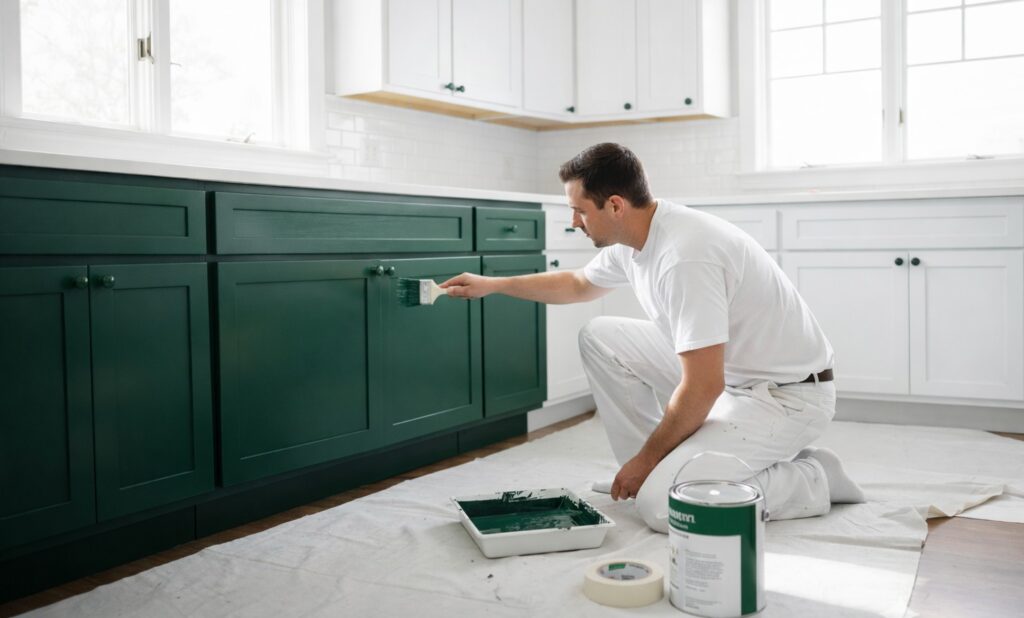
7 Best Paints for Kitchen Cabinets (Durable, Washable, and Loved by Pros)

Cabinet paint has quietly changed in the last few years. More homeowners want “looks new” results without the downtime and cost of a full remodel, and paint manufacturers have responded with tougher, smoother, more washable formulas built for high-touch surfaces like doors and drawers.

If you’re searching for the best paint for kitchen cabinets, start with this: the winners are hard-curing enamels and cabinet-specific coatings that level well, resist frequent cleaning, and hold up to moisture and cooking grease. Products like waterborne alkyds and urethane-modified enamels are designed to deliver the durability people expect from old-school oil paint with the easier cleanup and lower odor of water-based paint.

Table of Contents

Key Takeaways

🠊 Pick the right category first. Waterborne alkyd and urethane-modified enamels tend to cure harder than standard wall paint, which is why pros use them for cabinets.

🠊 Satin or semi-gloss is the sweet spot. They’re easier to clean than flatter finishes and handle moisture better in busy kitchens.

🠊 Prep beats brand. Degreasing, scuff-sanding, and using the right primer are what prevent peeling.

🠊 Cure time matters more than dry time. Cabinets can feel dry quickly, but take longer to reach full scrub resistance and hardness.

🠊 Older homes need extra caution. If your home is pre-1978 and you’re hiring out cabinet sanding or scraping, lead-safe practices and certification can apply.
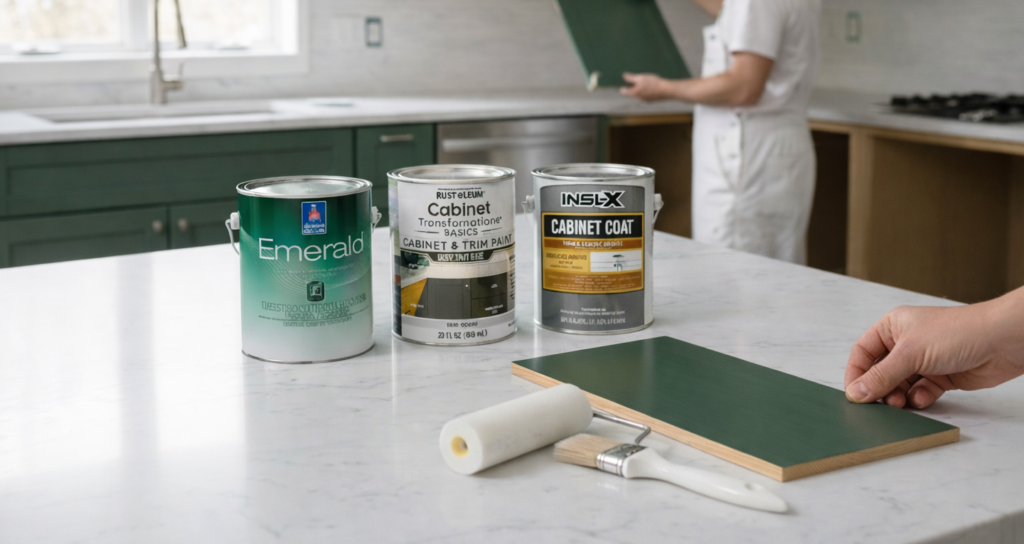
Best Paint for Kitchen Cabinets

✔ Best Overall for Most Homes

Benjamin Moore Advance

A waterborne alkyd enamel built for trim and cabinets, known for leveling that helps reduce brush marks and for a cured finish made to stand up to repeated wiping.

Best for:

  • Homeowners who want a smooth, furniture-like finish without a sprayer.
  • Kitchens with heavy daily use

Watch for:

  • Cure time before heavy scrubbing to avoid imprinting

Best Sheen:

  • Satin or semi-gloss for most households

✔ Best for a “Factory-Like” Look

Sherwin-Williams Emerald Urethane Trim Enamel

This water-based enamel is positioned specifically for cabinets, doors, and trim, and it’s designed to cure into a hard, durable finish that handles frequent cleaning.

Best for:

  • Busy kitchens that see frequent wipe-downs.
  •  High-touch doors, drawer fronts, and trim details

Pro Tip:

  • Thin, even coats reduce drag marks and improve leveling

✔ Best Budget-Friendly Performer

Behr Urethane Alkyd Enamel

A water-based urethane alkyd that aims to mimic traditional oil durability while keeping water cleanup.

Best for:

  • Budget-conscious cabinet refreshes with solid performance.
  • Rentals, resale prep, and midrange remodels

Watch For:

  • Primer selection matters on slick or glossy surfaces

✔ Best for Faster Recoats

INSL-X Cabinet Coat

A cabinet-focused coating marketed for “factory-like” smoothness and strong adhesion, including on difficult surfaces.

Best for:

  • A smooth, durable finish with strong adhesion.
  • Painted cabinet makeovers where adhesion is the worry

Pro Tip:

  • Match the primer to the substrate, not just the color

✔ Best All-in-One System

Rust-Oleum Cabinet Transformations

A multi-step kit that includes cleaning and topcoat components, made for refinishing a range of cabinet surfaces.

Best for:

  • DIYers who want a “system” instead of building one from scratch.
  • Laminate, previously finished wood, and mixed-condition cabinets

Watch For:

  • Thick coats at the edges can drip and cure unevenly

✔ Best Big-Box Convenience Option

Valspar Cabinet and Furniture Oil-Enriched Enamel

A cabinet-and-furniture enamel that emphasizes a durable finish, stain resistance, and reduced brush marks.

Best for:

  • Weekend projects with a durable, low-brush-mark look.
  • High-visibility kitchens where a smooth look matters

Pro Tip:

  • Let doors cure longer before reinstalling bumpers and closing tightly

✔ Best for Sprayers and Pro Setups

General Finishes Enduro White Poly

A professional, spray-oriented cabinet finish engineered for cabinets and millwork, with technical documentation aimed at shop-level results.

Best for:

  • Sprayed cabinet finishes and pro-level durability.
  • Sprayers, workshops, and high-expectation projects

Watch For:

  • Proper undercoat and substrate prep to prevent adhesion failure

Best Type of Paint for Kitchen Cabinets

Waterborne Alkyd vs. Acrylic vs. Cabinet Enamel

  • Waterborne alkyd enamels aim to deliver the leveling and durability associated with oil-based alkyds, but in a waterborne formula.
  • Urethane-modified enamels are formulated to provide a hard, durable finish with strong flow and leveling, and are commonly marketed for cabinets and trim.
  • Cabinet-specific acrylic or urethane-acrylic coatings often prioritize adhesion on tricky surfaces and a smooth film build.

Primer Rules Painting Contractors Don’t Break

  • Use a stain-blocking primer for bleeding woods or stains. Technical guidance for cabinet coatings often calls out specific primers for bleeding-type woods.
  • Use a bonding primer for slick surfaces. Painted, varnished, or laminate-like surfaces need help with adhesion.
  • Do not skip surface cleaning. Degreasing is not optional in kitchens.

Best Paint Finish for Kitchen Cabinets

Satin vs. Semi-Gloss vs. Gloss

  • Satin: A popular cabinet choice when you want a softer look that still cleans well.
  • Semi-gloss: More reflective and typically even easier to wipe down in high-traffic areas.
  • High-gloss: Very durable and very shiny, but it can spotlight dents, grain, and brush marks.

Choose satin if…

You want a modern, calmer look, and your cabinets have minor imperfections.

Choose semi-gloss if…

You expect heavy cleaning, kids’ fingerprints, or frequent cooking splatter.
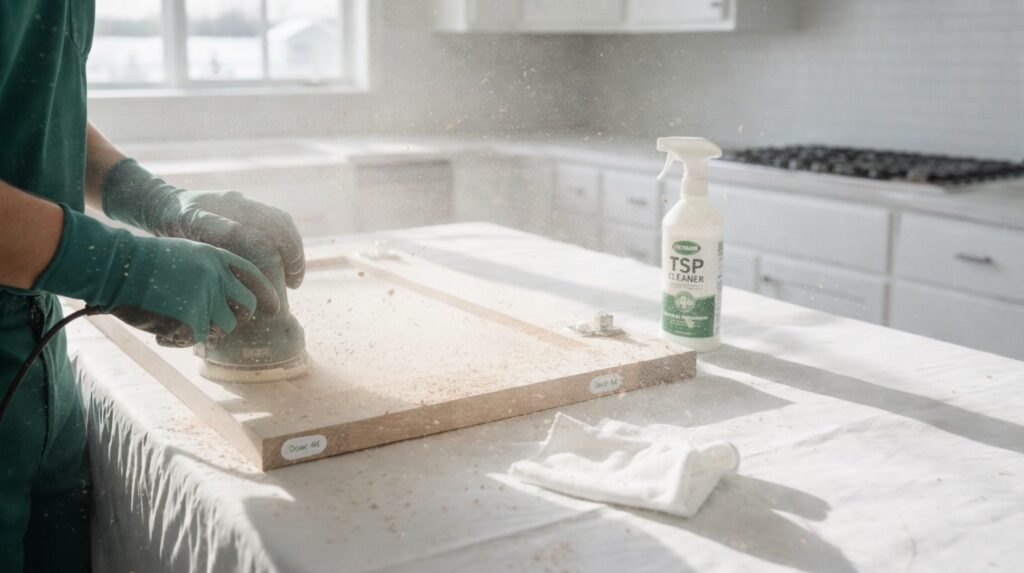
Best Paint for Cabinets Prep: The Pro Checklist

Surface Prep That Prevents Peeling

The goal is simple: remove contamination, dull the shine, and give the coating something to grab.

  • Remove hardware and label everything. Number doors and drawers so reassembly is painless.
  • Degrease thoroughly. Use a cleaner that cuts kitchen oils, then rinse and let surfaces dry.
  • Scuff-sand to degloss. You’re creating “tooth,” not stripping to bare wood in every case.

Remove dust completely. Dust left behind becomes texture and weakens adhesion.

Application Steps for a Smooth, Durable Finish

  • Prime strategically. Prime raw areas, stains, and slick surfaces based on the substrate.
  • Apply thin, even coats. Thick coats sag, cure more slowly, and can lead to sticky doors.
  • Sand lightly between coats. A smooth finish usually takes patient sanding and dust control.

Dry Time vs. Cure Time

Cabinets often feel dry long before they’re truly tough. Many enamel systems continue hardening for days or weeks, and scrub resistance improves as the coating cures. If you reinstall doors too fast or start scrubbing aggressively too soon, you can imprint the finish or reduce longevity.

Best Paint for Kitchen: When It’s Smarter to Hire Painting Contractors

Red Flags That Make DIY Risky

  • You have a pre-1978 home and plan to sand or scrape heavily. Lead-safe rules can apply to paid work that disturbs old paint, and it’s worth getting a certified pro involved.
  • Your cabinets are coated in heavy grease or old varnish. Adhesion failures often show up months later, right when you’re done thinking about the project.
  • You want a spray-smooth finish fast. Spraying can look incredible, but it’s technique-heavy and prep-sensitive.

What Pros Do Differently

  • They control prep and dust like a system. That’s where durability starts.
  • They match primers to the surface. Especially on bleeding woods and previously finished cabinets.
  • They plan for the cure time. Not just “dry today, use tomorrow.

Frequently Asked Questions

A cabinet-specific enamel, such as a waterborne alkyd or urethane-modified paint, is the best cabinet paint because it cures hard, resists moisture, and holds up to frequent cleaning.

Professional painters typically use high-quality cabinet or trim enamels paired with the correct primer, applied in thin coats and often sprayed for the smoothest results.

Satin is the most common choice for kitchens because it balances easy cleaning with a softer look, while semi-gloss is better for high-traffic homes that need extra washability.

The smoothest finish comes from thorough cleaning, proper sanding, using the right primer, and applying thin, even coats with adequate drying time between them.

Use a high-quality brush or foam roller, apply thin coats, work in long, consistent strokes, and choose a self-leveling cabinet paint designed to minimize brush marks.

Get a Cabinet-Ready Finish in Brewster, NY

Cabinet painting looks simple until you factor in grease, sanding dust, primer selection, and the reality that doors get handled dozens of times a day. If you want a finish that stays smooth, washable, and chip-resistant, Brewster Best House Painting can help you choose the best kitchen cabinet paint for your cabinets’ material and condition, then execute the prep and coating steps that make the results last.

Schedule a cabinet painting consultation with Brewster Best House Painting in Brewster, NY, to get a clear plan for product selection, sheen, timeline, and expected durability.