
What’s In This Guide
- Why Bathroom Paint Sheen Matters
- Best Finish for Bathroom Walls
- Best Finish for Bathroom Ceilings
- Best Finish for Trim and Doors
- Best Finish for Bathroom Vanities
- How to Choose the Right Bathroom Finish
- Do Not Paint Over Active Mold or Moisture Damage
- Frequently Asked Questions
- Plan Your Bathroom Painting Project
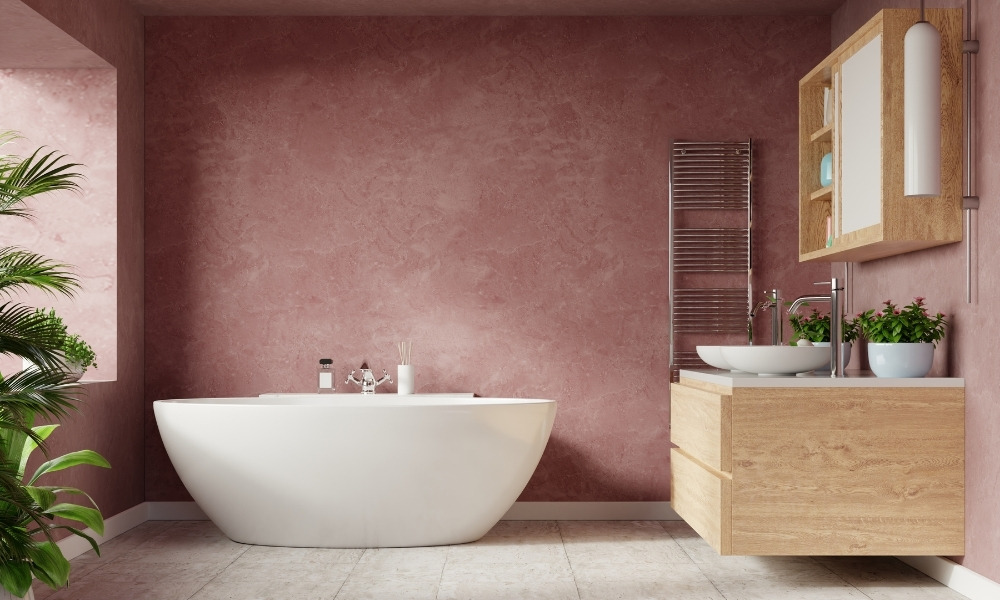
Using one sheen throughout a bathroom can create problems. Walls need moisture resistance without excessive glare, ceilings should disguise flaws, and trim and vanities need tougher coatings that withstand splashes and cleaning.
For homeowners wondering which paint finishes make the most sense for a bathroom, a surface-by-surface approach works best. Satin usually suits walls, moisture-resistant flat or matte finishes suit ceilings, and semi-gloss protects trim, doors, and vanities.
Ventilation, preparation, and product quality remain essential. This approach improves cleanability where needed while keeping larger surfaces visually calm, especially under bright vanity lighting and natural daylight.
Quick Facts
- Use satin on most bathroom walls for washability, moisture resistance, and moderate shine.
- Choose bathroom-rated flat or matte paint for ceilings unless condensation is severe.
- Apply semi-gloss to trim, doors, baseboards, and casings that need frequent cleaning.
- Use satin or semi-gloss cabinet enamel on vanities, not ordinary wall paint.
- Repair leaks, remove mold, dry surfaces, prime, and improve ventilation before painting.
Why Bathroom Paint Sheen Matters
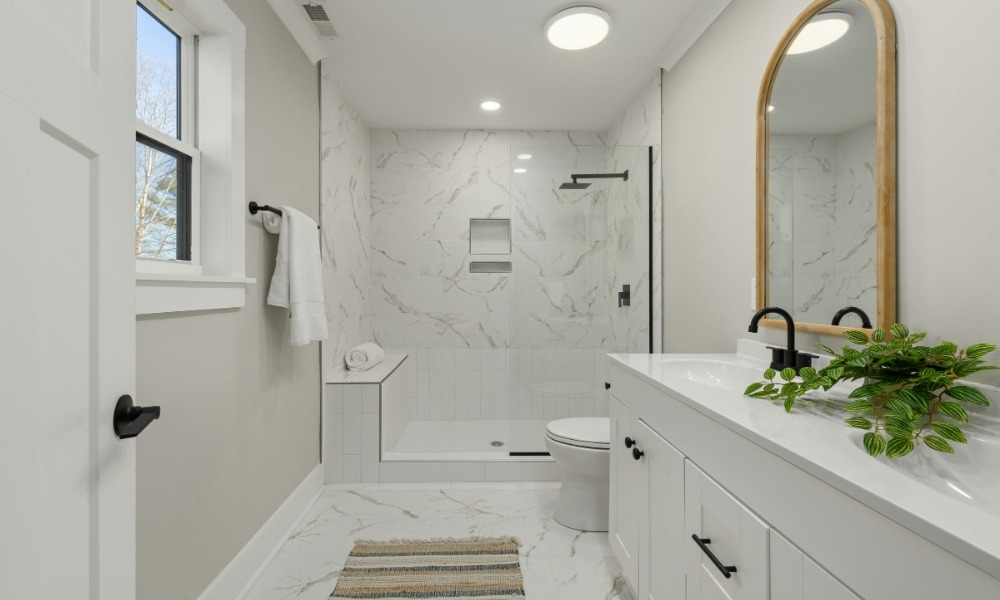
Paint sheen describes how much light a coating reflects. Flat and matte reflect little light, while satin, semi-gloss, and gloss become progressively shinier. Higher sheens generally resist stains and clean more easily, but they also expose dents, patches, brush marks, and uneven drywall.
Humidity changes the decision. Steam can condense on cool walls and ceilings, while water splashes repeatedly reach areas around sinks and tubs. The U.S. Environmental Protection Agency explains that moisture control is the key to mold control and advises homeowners to run bathroom fans or open windows while showering.
Paint can create a more durable and easier-to-maintain surface, but it cannot correct leaks, persistent condensation, or inadequate ventilation.
Best Finish for Bathroom Walls
Satin is the most practical default for walls in a full bathroom. It offers enough durability for routine wiping, handles occasional condensation better than conventional flat paint, and produces less glare than semi-gloss. This balance matters in compact bathrooms, where strong lighting can make glossy walls appear uneven.
Eggshell may work in a well-ventilated powder room or a low-moisture bathroom, especially when homeowners prefer a softer appearance. However, sheen names differ between manufacturers. One brand’s eggshell may resemble another brand’s satin. Compare the product label, technical information, and recommended room applications instead of relying only on the sheen name.
Best Finish for Bathroom Ceilings
A bathroom ceiling does not automatically need semi-gloss. A high-quality, bathroom-rated flat or matte ceiling paint often provides the cleanest result because it minimizes glare and hides minor surface irregularities. Modern specialty formulas can offer better moisture and mildew resistance than basic builder-grade ceiling paint.
Consider satin when the ceiling repeatedly collects condensation, sits directly above a shower, or requires more frequent cleaning. Before painting, determine why moisture remains. The U.S. Environmental Protection Agency recommends keeping indoor humidity between 30 and 50 percent and notes that bathroom exhaust fans that vent outdoors help increase ventilation. No sheen compensates for a fan that is undersized, blocked, or vented into an attic.
Best Finish for Trim and Doors
Semi-gloss remains a reliable choice for baseboards, crown molding, window casings, doors, and door frames. These surfaces collect fingerprints, dust, water droplets, and cleaning residue. Semi-gloss creates visual separation from lower-sheen walls and usually withstands repeated wiping better.
Best Finish for Bathroom Vanities
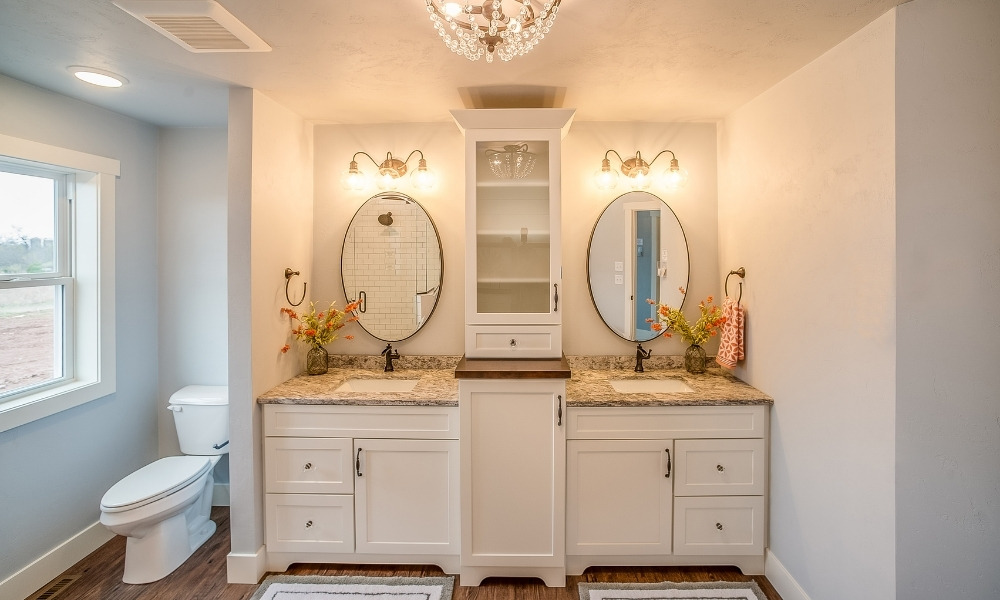
Bathroom vanities need cabinet, trim, or furniture enamel, not standard wall paint. Doors and drawers are exposed to frequent contact, splashes, and cleaning. Waterborne acrylic or alkyd enamels can level smoothly and cure to a harder finish than typical wall paint.
Choose satin for a restrained look or semi-gloss for easier cleaning and stronger contrast. Follow the manufacturer’s instructions for primer, recoating, and cure time before reinstalling hardware.
READ MORE: Paint Finish Guide: Flat, Eggshell, and Satin Compared
How to Choose the Right Bathroom Finish
1. Check moisture conditions.
Find leaks, peeling paint, mold, stains, and lingering condensation.
2. Evaluate ventilation.
Confirm the exhaust fan works and vents outdoors.
3. Match sheen to the surface.
Use satin for walls, moisture-resistant flat or matte for ceilings, and satin or semi-gloss enamel for trim and vanities.
4. Inspect surface quality.
Lower sheens better conceal uneven repairs.
5. Prepare thoroughly.
Clean, remove loose paint, repair defects, sand, and prime bare or stained areas.
6. Read the label.
Confirm that the product is suitable for bathrooms, compatible with the substrate, and appropriate for the expected cleaning demands.
Do Not Paint Over Active Mold or Moisture Damage
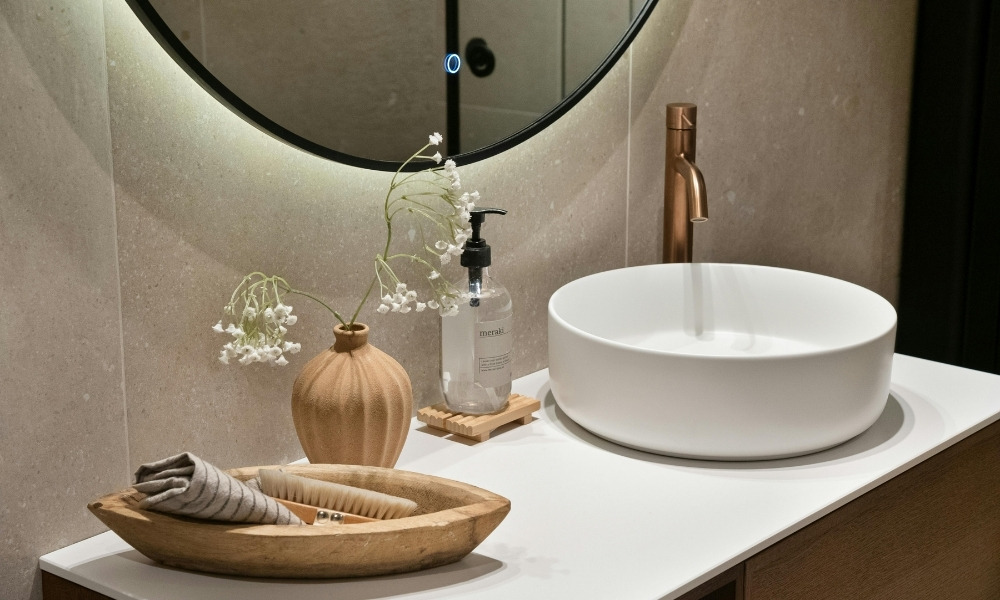
The EPA advises against painting or caulking moldy surfaces because paint applied over mold is likely to peel. Clean or remove the mold, correct the moisture source, and allow the affected material to dry completely before painting. Large, recurring, or hidden mold problems may require professional assessment. A fresh finish should be the final step after the underlying moisture problem has been addressed.
Frequently Asked Questions
What sheen of paint works best for bathroom walls?
Satin usually provides the best overall balance. It tolerates routine cleaning and humidity while showing fewer wall imperfections than semi-gloss.
What type of paint works best for bathroom ceilings?
Use a high-quality acrylic ceiling paint labeled for bathrooms or moisture-prone rooms. Flat or matte is suitable for many ceilings, while satin can help where condensation and cleaning demands are higher.
What kind of paint should homeowners choose for bathroom vanities?
Use a cabinet, trim, or furniture enamel compatible with the vanity material and primer. Satin and semi-gloss are both practical, depending on the preferred appearance and cleaning needs.
Should every bathroom surface use semi-gloss?
No. Using semi-gloss everywhere can create glare and expose drywall flaws. Match the finish to each surface’s moisture exposure, contact, cleaning demands, and condition.
Do bathroom walls need a special primer before painting?
Often, yes. Primer can improve adhesion, cover stains, and help create a more even finish, especially on new drywall, patched areas, glossy surfaces, or walls previously affected by moisture.
Plan Your Bathroom Painting Project
Selecting the right sheen by surface creates a bathroom that looks intentional and remains easier to maintain. Brewster Best House Painting can evaluate walls, ceilings, trim, and vanities, identify preparation needs, and recommend finishes suited to the room’s ventilation and daily use.
Get a free estimate to plan your bathroom painting project in Brewster, NY.